
195.4K
Downloads
221
Episodes
Guy Windsor and friends discuss sword training, historical swordsmanship, research, and other topics. Guests include well-known instructors and experts in the field. You can support the show at https://www.patreon.com/theswordguy.
Episodes

May 14, 2021
May 14, 2021
1hr 18 min
The Sword Guy Podcast, episode 50
For transcriptions and more detailed shownotes, please go to https://swordschool.com/podcast/revolution-cooking-knitting-episode50/
To support the show, come join the Patrons at https://www.patreon.com/theswordguy
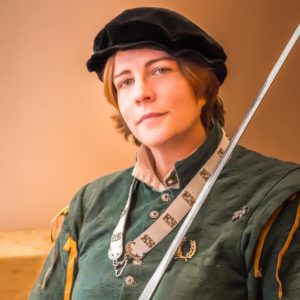
It’s the 50th episode! This week I’m in conversation with Monica Gaudio, known in the SCA as Illadore de Bedegrayne, and she is a cook, fencer, Marshal, Seneschal, knitter, Laurel and Master of Defence. We get into what all those titles mean in the episode.
Monica has been studying medieval cookery for 30 years, with a mostly hands-on approach, i.e. trying to feed anywhere from 40 to 150 people at feast or dinner in the most "period" way possible. She is known for an internet furore concerning a plagiarised apple pie recipe, which kicked off a massive “nerd rage”. So much so, there is a Wikipedia page about it: https://en.wikipedia.org/wiki/Cooks_Source_infringement_controversy
Here's the medieval cooking website that Monica manages: http://www.godecookery.com/godeboke/godeboke.htm
When we talk about knitting, the book mentioned is this one:
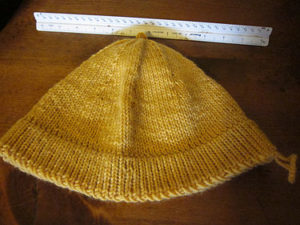
https://www.amazon.com/History-Hand-Knitting-Richard-Rutt/dp/0979607345 and this is what a Monmouth Cap looks like:
(Image from https://en.wikipedia.org/wiki/Monmouth_cap)
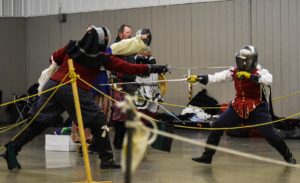
As well as medieval cookery and knitting, we discuss the antagonism between the SCA and HEMA communities, and go into a bit of detail about how the SCA is structured and what all the different titles mean. Monica is an accomplished fencer, currently ranked 35th, and she shares her techniques for getting into the right mindset for the many tournaments that she competes in. For more on mindset, check out my Solo Training course, which Monica very kindly recommends: https://swordschool.teachable.com/p/solo-training
And finally, listen to the end to hear about the revolution Monica is starting in the SCA, and the wider historical martial arts world. To join her, contact Monica on: monica.gaudio@gmail.com
May 10, 2021
May 10, 2021
22 min
For transcriptions and more detailed shownotes, please go to https://swordschool.com/podcast/the-progression-of-teacher-training-in-swordschool/
To support the show, come join the Patrons at https://www.patreon.com/theswordguy
Teaching well is a skill that can be learned. In this in-between-isode, I give you the key to teaching teachers.
If you have a student who has expressed an interest in teaching, how can you empower them to become a good teacher?
This episode covers essentials such as:
- Avoiding burnout
- Giving feedback
- How to teach and structure a class, take responsibility, and broaden their skills
This was prepared for one of my Coaches’ Corner sessions. Coaches’ Corner sessions are a monthly get together at 3pm (UK time) on the second Saturday of each month. Each session has a theme, and we have a discussion and Q&A session afterwards. It is a really useful environment for both those who are interested in teaching and those who have decades of experience. If that sounds like your sort of thing, feel free to join us. You can find the link to the sessions at www.guywindsor.net/coaching.
May 7, 2021
May 7, 2021
1hr 38 min
The Sword Guy Podcast, episode 48
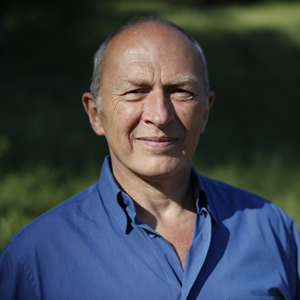
For transcriptions and more detailed shownotes, please go to https://swordschool.com/podcast/mike-loades-episode48/
To support the show, come join the Patrons at https://www.patreon.com/theswordguy
Best known as a television presenter and for his appearances as a historical weapons specialist and military historian in over one hundred tv documentaries, Mike also works as a tv director, a writer and as a consultant and film-maker for the video games industry. If you've been swinging swords, certainly in Britain at least, at any point in the last 30 years, you'll certainly have heard of him.
He has had three major books published, Swords and Swordsmen, War Bows and Dogs: Working Origins and Traditional Tasks, with more commissioned books in the pipeline (about horses). Other works include The Longbow, The Crossbow and The Composite Bow for Osprey and he was a primary contributor to The Worldwide History of Warfare (Thames and Hudson) and to ‘Masters of the Steppe: The Impact of the Scythians and Later Nomad Societies of Eurasia’ (Archeopress).
In our conversation we cover galloping a Roman chariot through central London, war bows, dogs, castles, and what it was like doing historical martial arts before it became popular. Mike has many incredible stories and insights from his long career, which I am sure you will enjoy as much as I did.
As a taster, have a watch of this video showing some of his horsemanship and archery skills:
https://player.vimeo.com/video/412913409
This video and many more can be found on Mike’s website: http://www.mikeloades.com/
The Mike Loades YouTube Channel: https://www.youtube.com/channel/UC39m9qw0F45UaMWlug0sbGg
May 3, 2021
May 3, 2021
4 min
For transcriptions and more detailed shownotes, please go to https://swordschool.com/podcast/may-challenge-skill/
To support the show, come join the Patrons at https://www.patreon.com/theswordguy
Last month’s challenge (Eat Well in April) was difficult for many people, mostly because food is such an emotional subject. Personally, I spent the month avoiding starch and sugar, which has helped with energy levels, weight management, and especially my reflux problem. I’ve also been adhering more closely to a 16:8 intermittent fasting routine, which is also better for my reflux.
The odd thing is that though the house is full of Nutella, chocolate (I haven’t had my easter eggs yet), crisps, bread, etc., it’s actually been really easy to stay off them. I don’t know why, but I think planning ahead and making sure that there were starch and sugar free alternatives ready beforehand was really helpful. I’m planning on relaxing things a bit (those easter eggs need eating) but keeping off the starch most of the time, especially at breakfast.
So what’s next for May?
You already know how to break a habit and make a habit, and you’re hopefully sleeping better and eating better. So you are perfectly placed to start learning something new.
That’s the challenge: learn a new skill. It can be anything: pick up a language on Duolingo. Knitting. Sewing yourself a shirt. Playing the lute. Or the flute. Flying a plane. You can make it something useful if you like (one of the best decisions I ever made was learning to touch-type (described here: Artist and Slugs, Typing Too)), but what I have in mind is something fun, whatever fun looks like to you.
Ideally, this will put you into that arse-clenchingly frustrating “oh goddess why won’t my fingers do what they’re supposed to” beginners’ experience. So, if you’re already an accomplished woodworker, learning to carve might not give you that. But sewing might. Wood stays still- cloth moves about all over the bloody place!
Getting right outside your comfort zone and putting in the time to get past that first dip is the point of this exercise. I’d ask that you commit to a regular practice schedule for the month. You can quit at the end of the month if it turns out to be not fun, or not a useful skill, but just a month should be enough for you to get the hit of beginneriness (yes, that is a word, I just wrote it) that will deliver the benefits. Those benefits are:
1. Neuroplasticity- which is just the fancy way of saying your brain making new connections and rewiring itself. This is the fundamental biological process that is learning. You get better at it the more you do it.
2. Empathy for beginners. This is especially useful for instructors, who may forget what it was like to be totally clueless at the art they are trying to teach.
3. Fun, and the satisfaction of seeing progress. You’ll probably never progress quite so far so quickly as in that first month, when you go from “this is all totally unfamiliar” to “this is really hard but I can do this first small thing”.
As always with my challenges, there are no hard and fast limits. You’ll know if you’re taking the soft option, or cheating.
Here’s one idea you may not have considered. I saw this last week when one of my students sent it to me (thanks Jason!): toe yoga.
https://vimeo.com/200836488
Have fun with that!
Apr 30, 2021
Apr 30, 2021
56 min
Episode 46
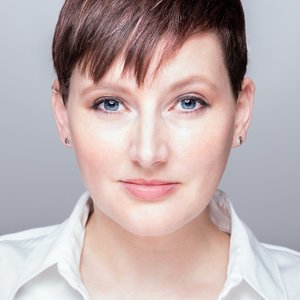
For transcriptions and more detailed shownotes, please go to https://swordschool.com/podcast/people-like-us-daniele-cybulskie-episode46/
To support the show, come join the Patrons at https://www.patreon.com/theswordguy
As a writer, professor, TEDx speaker, and podcaster, Danièle has been making the Middle Ages fun, entertaining, and accessible for over a decade. She is the author of Life in Medieval Europe: Fact and Fiction, and The Five-Minute Medievalist, which debuted at the top of Amazon’s Canadian charts, as well as the forthcoming How to Live Like a Monk: Medieval Wisdom for Modern Life. Through her featured articles at Medievalists.net, as well as those she’s written for several international magazines, Danièle’s work has reached over a million readers worldwide. Danièle is also the creator and host of The Medieval Podcast, a weekly show on which she interviews experts on the Middle Ages about a wide variety of topics.
In this episode, we share some of the questions we get asked, like, “Were swords sharp?” or, “Did medieval people love their children?” Danièle is passionate about dispelling some of the myths many of us grew up with about this time period, as well as helping people to realise that Middle Ages folk were human beings, with exactly the same loves, fears, and feelings as you or I.
We also discuss Danièle’s online course, The Medieval Masterclass for Creators, which is designed to provide novelists, game developers, and other fiction creators with information about various aspects of medieval life, such as what a drinking cup looked like, what the texture is of a piece of medieval linen, or what medieval life sounded like.
You can follow her on Twitter @5MinMedievalist or visit her website, danielecybulskie.com.
Apr 23, 2021
Apr 23, 2021
1hr 22 min
Episode 45
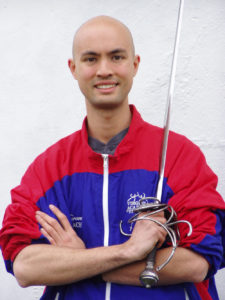
For transcriptions and more detailed shownotes, please go to https://swordschool.com/podcast/swords-and-historical-handcrafts-episode45/
To support the show, come join the Patrons at https://www.patreon.com/theswordguy
Bill Grandy is a long time professional historical martial arts instructor at the Virginia Academy of Fencing (VAF) in the United States, and also a historical handcrafter making beautiful scabbards and shields and things. Check out his website at www.historicalhandcrafts.com.
In this episode we talk about lots of different aspects of being a sword person, including teaching professionally and as an amateur; getting to play with antique swords and the work of the Oakeshott Institute; and owning Michael Chidester’s wonderful facsimiles of medieval manuscripts. We also talk about getting books written and published (or not), and how a sport fencing background influences your teaching of historical martial arts. There’s even more too - this episode really does cover a lot!
Useful links:
Bill’s websites: www.historicalhandcrafts.com for his leather and woodwork, and for the full details and pictures of the Schiavona and Dussack we talk about in the episode: www.thehemaists.com
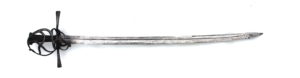
Bill’s Styrian Dussack
For more on the Oakeshott Institute and antique swords, here’s my conversation with Craig Johnson: https://guywindsor.net/2021/02/how-to-make-swords-episode33/
For more about Wiktenauer and Michael Chidester, my conversation with Michael is here: https://guywindsor.net/2020/11/wiktenauer-episode21/ and Michael’s Patreon: https://www.patreon.com/michaelchidester
The Virginia Academy of Fencing: www.vafinc.com
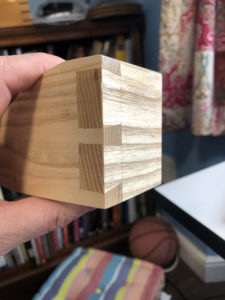
And finally, for woodworkers, this is the YouTube channel by Rex Krueger we talk about: Rex Krueger: Making Woodwork Fun. Here’s a photo of my dovetail joint, as promised:
Apr 16, 2021
Apr 16, 2021
59 min
The Sword Guy Podcast, episode 44
For transcriptions and more detailed shownotes, please go to https://swordschool.com/podcast/fire-and-cauldrons-episode44/
To support the show, come join the Patrons at https://www.patreon.com/theswordguy
Ruth Goodman is a social and domestic historian working with museums, theatre, television and educational establishments. She has presented and consulted on several highly successful television series for the BBC. She has also written several excellent books we'll be talking about today, including The Domestic Revolution, How to be a Tudor and How to Behave Badly in Elizabethan England.
In this episode, Ruth and I talk about some of the lesser known, but nonetheless fascinating aspects of life in the Middle Ages, without what we think of “essential” cleaning products, or temperature controlled ovens. Yet people did get their clothes properly clean, and they were able to bake excellent cakes, pastries and bread. Ruth explains how they did this, and the type of learning that has been largely lost nowadays.
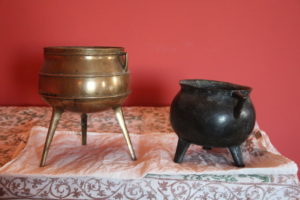
In our wide-ranging conversation, we also cover the importance of sheds, leaving kids in forests, giving knives to toddlers, and understanding fire. Ruth has a special passion for medieval cauldrons. Here’s a picture:
We also talk about how people would have dressed and moved at this time, all of which is very relevant if you are interested in martial arts from this, or any other period of history. We discuss how to research when there aren’t many sources available – as it turns out, there are many ways to skin a rabbit.
Apr 12, 2021
Apr 12, 2021
51 min
Episode 43
For transcriptions and more detailed shownotes, please go to https://swordschool.com/podcast/what-is-a-sword-episode43/
To support the show, come join the Patrons at https://www.patreon.com/theswordguy
What is a sword? When does a dagger become a sword? When does a sword become a spear? Can a boomerang even be a sword?
In a follow-up to my conversation with Australian martial artist and philosopher, Damon Young, this special episode picks up where episode 31 finishes, with a discussion where we try to come to an agreement on what a definition of a sword might be. If you have ever wondered about this very question, or already have your own definition in mind, have a listen and see if you agree with us!
Damon is the author of books like Philosophy in the Garden, and On Getting Off: Sex and Philosophy. He has also edited a couple of books on philosophy and martial arts: Engagement, Philosophy and the Martial Arts, and Martial Arts and Philosophy: Beating and Nothingness.
If you missed the first part of my conversation with Damon, you can find it here. It’s about the importance of the study of philosophy when practising martial arts. How we know the difference between bravery and foolhardiness, how can someone engage in violence and still be a good person. And perhaps, most importantly, however we define them, why are swords so damn cool?
Apr 8, 2021
Apr 8, 2021
59 min
The Sword Guy Podcast, episode 42
For transcriptions and more detailed shownotes, please go to https://swordschool.com/podcast/sitting-still-episode42/
To support the show, come join the Patrons at https://www.patreon.com/theswordguy
Tim Parks is a prolific novelist, non-fiction writer and translator and perhaps most importantly from my perspective, he wrote a fantastic memoir on getting into meditation, called Teach us to Sit Still. Those of you that train with me know that meditation is one of the core parts of my practise and in this episode Tim explains the circumstances that led to him going to his first meditation retreat, how it changes people, and how he does it.
Tim has lived in Italy for many years, and we also talk about translating texts and about horribly illegible Renaissance handwriting. Discussing his book, Medici Money, leads us into a fascinating digression about the meaning and morality of money.
To find out more about Tim Parks and his work, visit https://timparks.com/
Apr 2, 2021
Apr 2, 2021
47 min
Episode 41

For transcriptions and more detailed shownotes, please go to https://swordschool.com/podcast/writing-and-walking-episode41/
To support the show, come join the Patrons at https://www.patreon.com/theswordguy
Joanna Penn is a writer (both fiction and non-fiction), podcaster and ultramarathon walker. She doesn’t do swords, or even a lot of history, but she has been a huge influence on my work and this podcast. We don’t talk about martial arts in this episode, but we do discuss physical training, accomplishing goals, and Joanna’s medieval-style pilgrimage from London’s Southwark Cathedral to Canterbury Cathedral in Kent. That’s 182 km or 113 miles on foot. This took place in 2020, which was the 850th anniversary of the martyrdom of Thomas Becket, and we discuss cadaver tombs, memento mori, and what taking such a very long walk teaches you. To read more about Joanna’s pilgrimage, see:
https://www.booksandtravel.page/pilgrimage-canterbury/
And a list of questions to consider when taking a pilgrimage:
https://www.booksandtravel.page/pilgrimage-questions/
For all Joanna Penn’s books, links to her podcast, blog, and support for writers, where you will find resources to help you write, publish and market your book, as well as make a living with your writing: